
Rolex Dials: Materials
Rolex is known not only for its precision and quality, but also for the extraordinary variety of dials it has produced over the years. From the elegance of the Linen to the refinement of the Stone, Rolex dials tell stories of design and innovation. Here's a summary of the most iconic:
Linen
The Linen dial is easily recognizable thanks to its texture, which resembles linen fabric when viewed up close. This design appeared on several President and Datejust models in the 1960s, offering a touch of understated class.

(ph: windvintage.com)
Tapestry
The Tapestry dial also dates back to the 1960s, although it is less common than the Linen dial. The subtle, carved vertical ridges give the dial a subtle three-dimensionality, making it elegant in its simplicity.

(ph: eu.arbitro.shop)
Jubilee
Introduced in 1985 for the 40th anniversary of the Datejust, the Jubilee dial features a repeating "Rolex" name motif. This design can range from bold to extremely subtle, offering a modern twist on the traditional Rolex watch.

Wood
Wooden dials, particularly popular in the 1970s and 1980s, embody the aesthetic of that era. Featuring a variety of woods, including fine walnut, these dials add a warm richness to Rolex models, especially when paired with yellow gold cases and bracelets.

(ph: www.ssongwatches.com)
Hobnail/Cloude Paris (Snail)
With a style reminiscent of Art Deco, the Hobnail dial, also known as the "clou de Paris," is adorned with geometric reliefs that add depth and texture. This design has been used by several brands, including Rolex, which featured it most notably in the Cellini line.

(ph: bulangandsons.eu)
Floral
The floral dial is one of Rolex's most distinctive designs. With a floral motif engraved on the dial plate, often embellished with diamonds, this dial is a mix of elegance and whimsy, perfect for those seeking something unique.

(ph: theluxurywatchcompany.com)
Shantung (Mosaic)
One of the most fascinating designs, the Shantung dial, featuring horizontally woven silk threads, was created primarily for the Asian market between 1968 and 1978. This The rare dial is a celebration of craftsmanship and beauty.

(ph: bernardwatch.com)
Stone
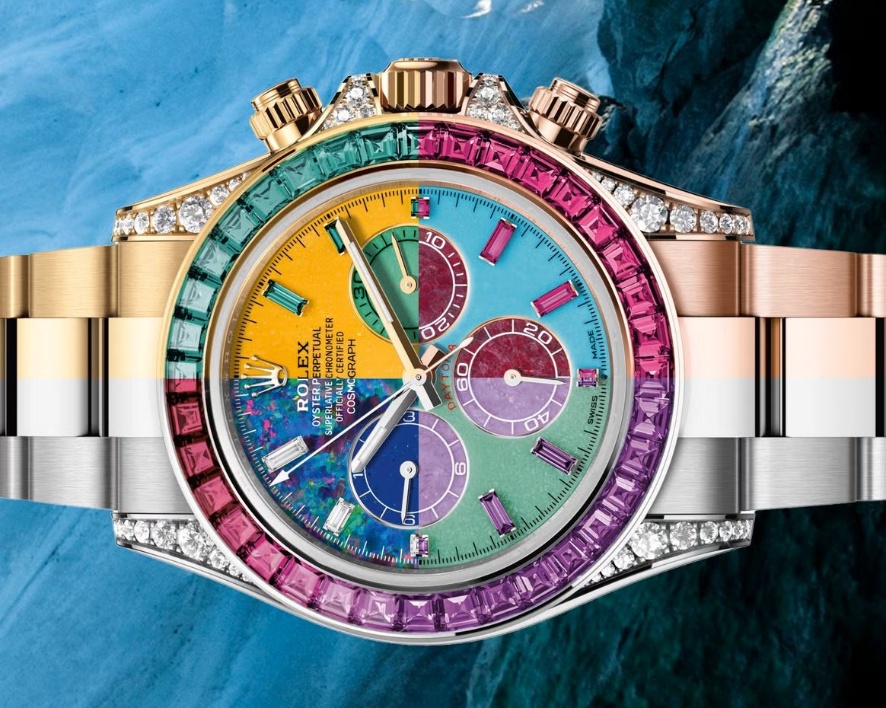
Finally, the Stone dial, popular in the 1970s and 1980s, uses precious and semi-precious stones such as jade, pyrite, jasper, and even fossils. These dials, besides being visually stunning, add a dimension of exclusivity and luxury to Rolex models. Some examples of stones used are: mother-of-pearl, coral, onyx, lapis lazuli, malachite, opal, jasper, turquoise, bloodstone, meteorite, ammonite, rubelite, grossularite, agate, marble, ferrite, tiger's eye, aventurine, sodalite, red jasper, etc. etc..

(ph. analogshift.com)
These dials demonstrate how Rolex is not only synonymous with precision watches, but also with art and design. Each tells a unique story, reflecting the trends and tastes of different eras.



Chiedi a uno dei nostri esperti certificati una consulenza personalizzata.
Chiedi all'Esperto

